


25 Aug 2026 Marino Apartments: Concrete Remediation for an Ageing Auckland Asset
How Contech diagnosed widespread reinforcement corrosion and developed a remediation approach matched to the actual condition of the structure.
Marino Apartments
Marino Apartments is an established residential building in Mt Eden, Auckland.
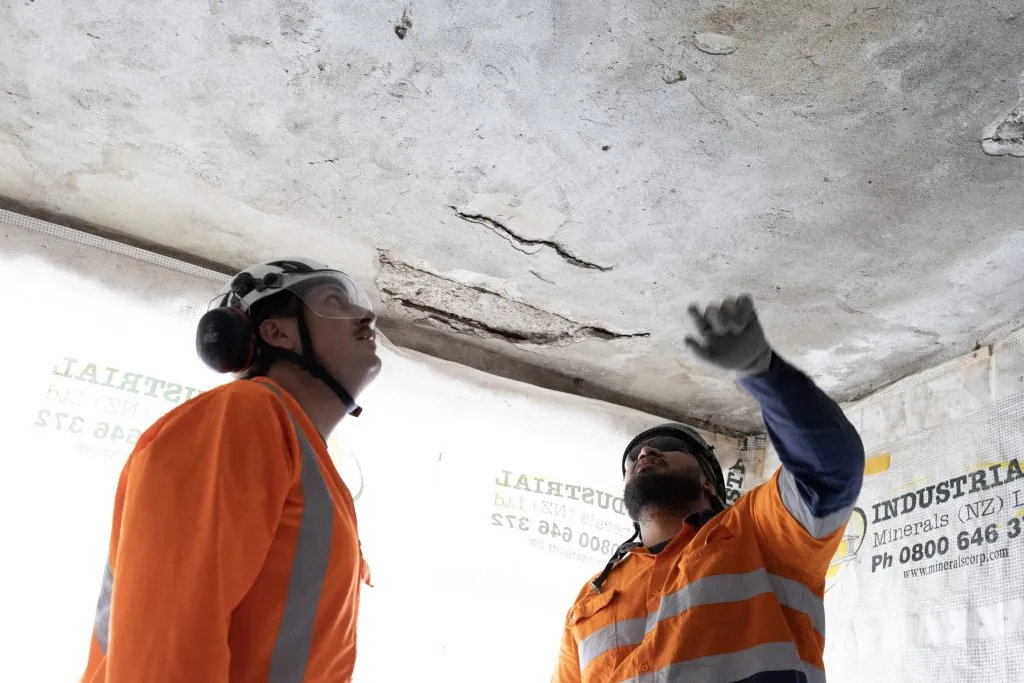
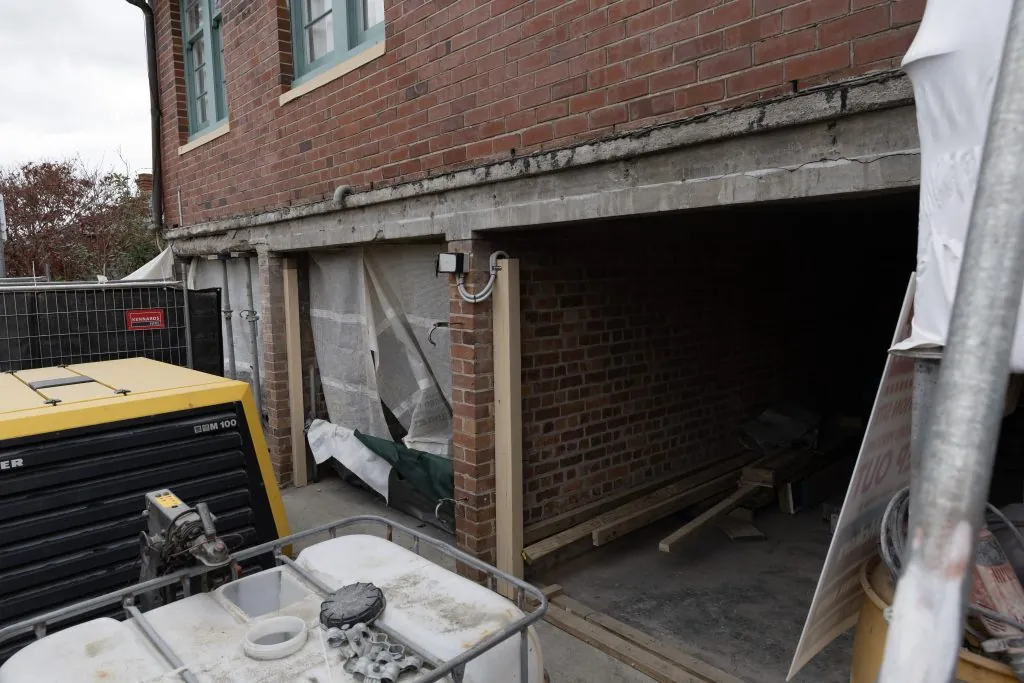
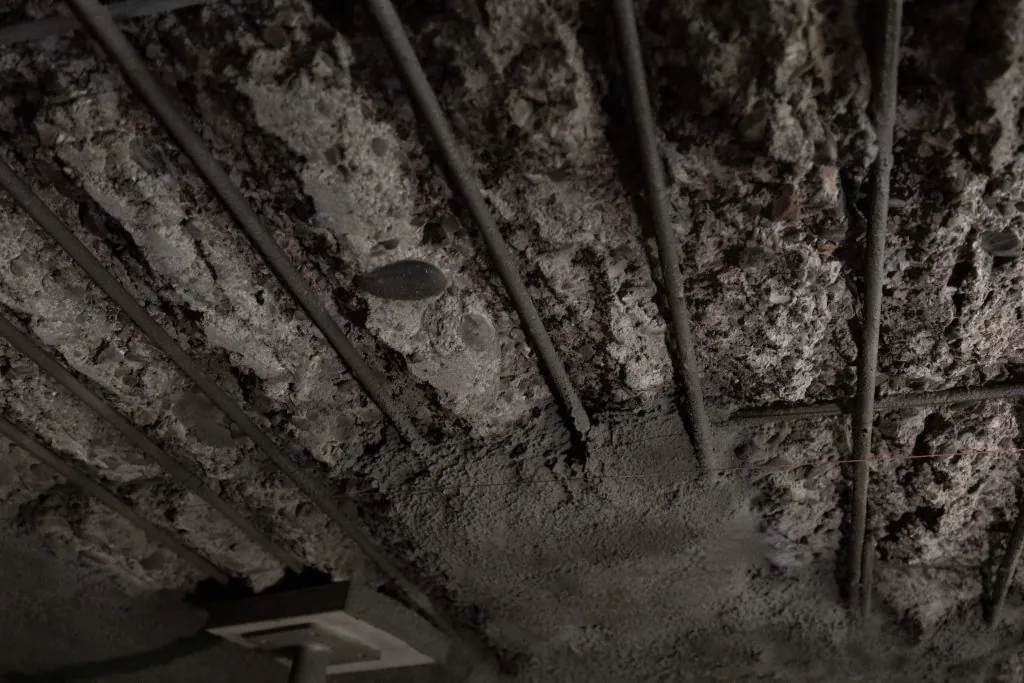
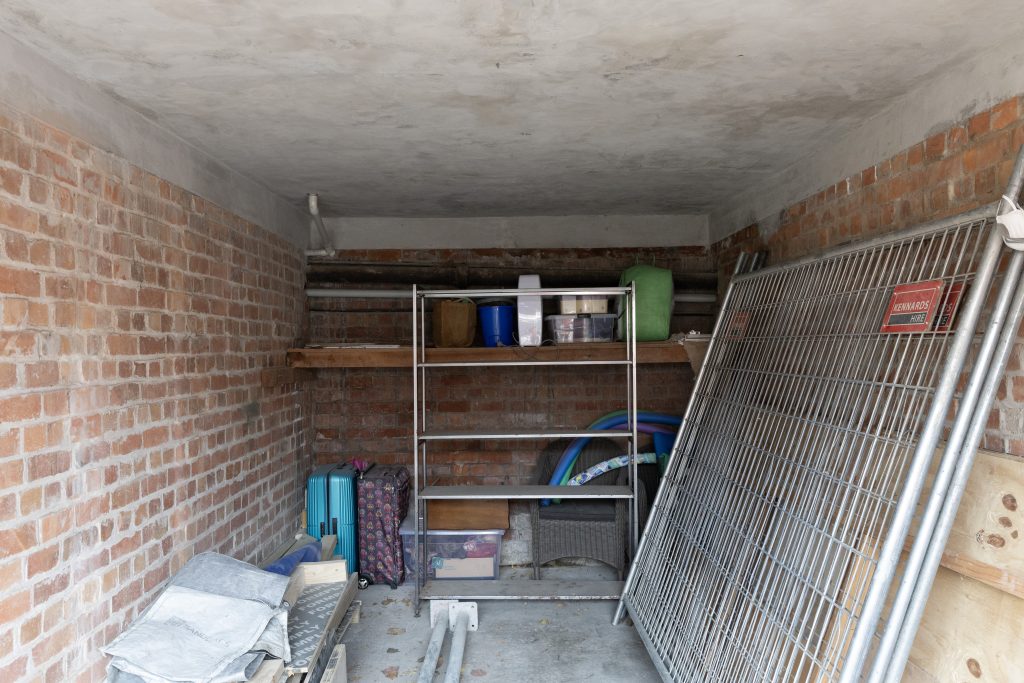
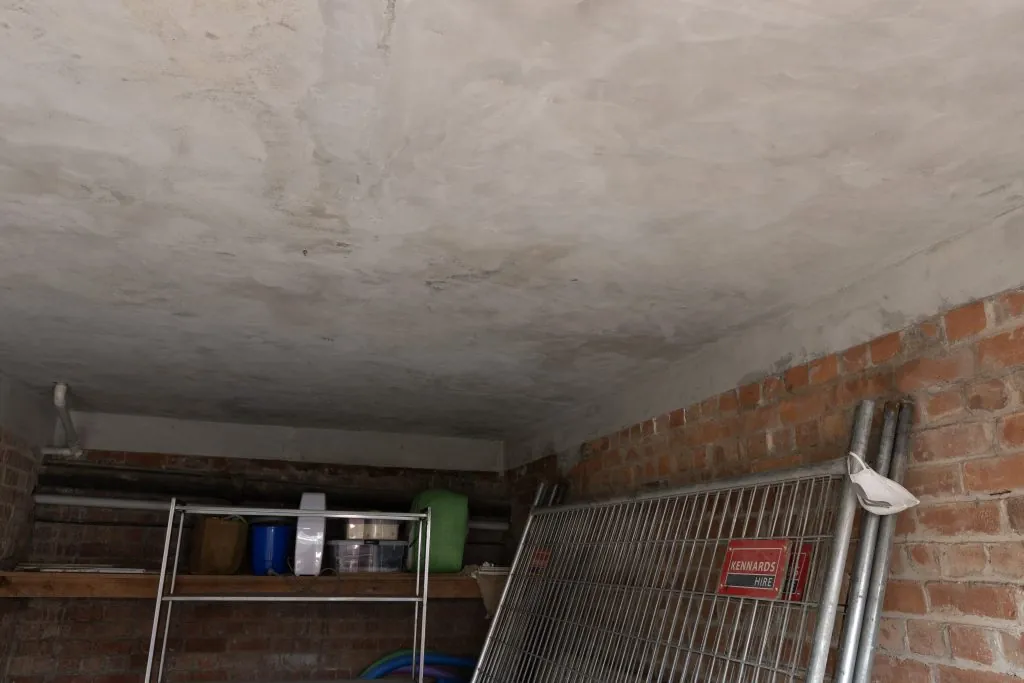
Reinforced concrete garage slab soffits, transverse beams and ring beams were showing widespread cracking, spalling and signs of previous repair failure.
The Marino Body Corporate engaged Contech to assess the condition of the structure, identify the underlying deterioration mechanisms and evaluate suitable remedial options.
What appeared as visible concrete damage was not simply a surface problem.
Contech’s investigation found that carbonation had progressed beyond the reinforcing steel in many tested areas, concrete cover to the reinforcement was generally low, and background chlorides were present.
Together, these conditions had created an environment in which reinforcement corrosion could continue.
The challenge was therefore not simply to repair what could be seen. It was to establish what was happening inside the concrete and match the remediation strategy to the actual condition of the structure.
Project snapshot
Project: Marino Apartments
Location: Mt Eden, Auckland
Client: Marino Body Corporate
Structure: Garage slab soffits, transverse beams and ring beams
Issue: Reinforcement corrosion, cracking, spalling and failed previous repairs
Investigation: Visual inspection, carbonation testing, chloride testing, reinforcing cover survey and electro-potential mapping
Remediation: Removal of deteriorated and contaminated concrete, assessment and repair or supplementing of reinforcement, and concrete reinstatement
Objective: A durable, long-term remediation approach matched to the condition of the structure
The problem
Visual inspection identified widespread defects consistent with reinforcement corrosion across a significant proportion of the structural elements inspected.
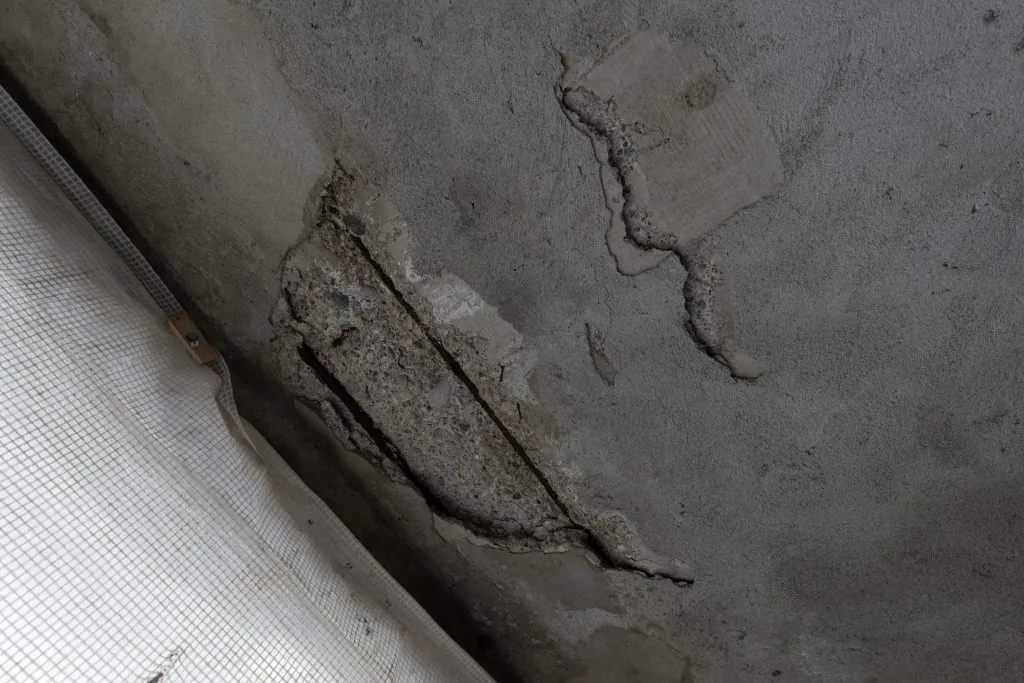
Cracking and spalling were present across slab soffits and beams. Previous localised repairs were also cracking and failing.
That distinction matters, because concrete repair cannot be selected from the visible symptom alone. Where corrosion is occurring beneath the surface, repairing only the obvious damaged area can leave the underlying deterioration mechanism unchanged.
At Marino Apartments, the evidence indicated that the deterioration was neither isolated nor superficial.
Good repair starts with diagnosis
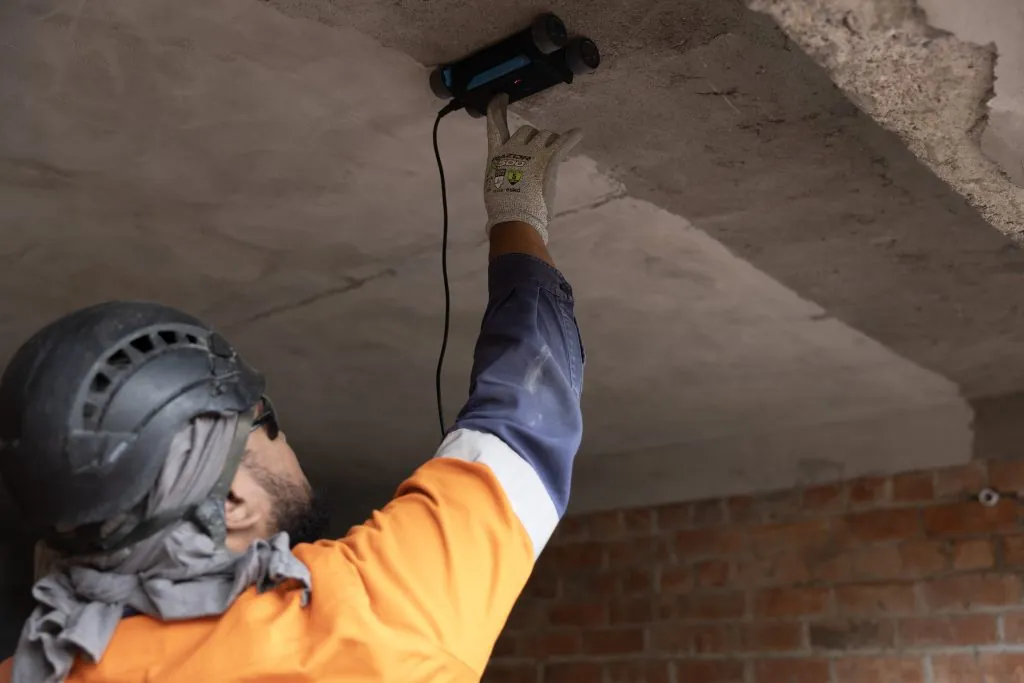
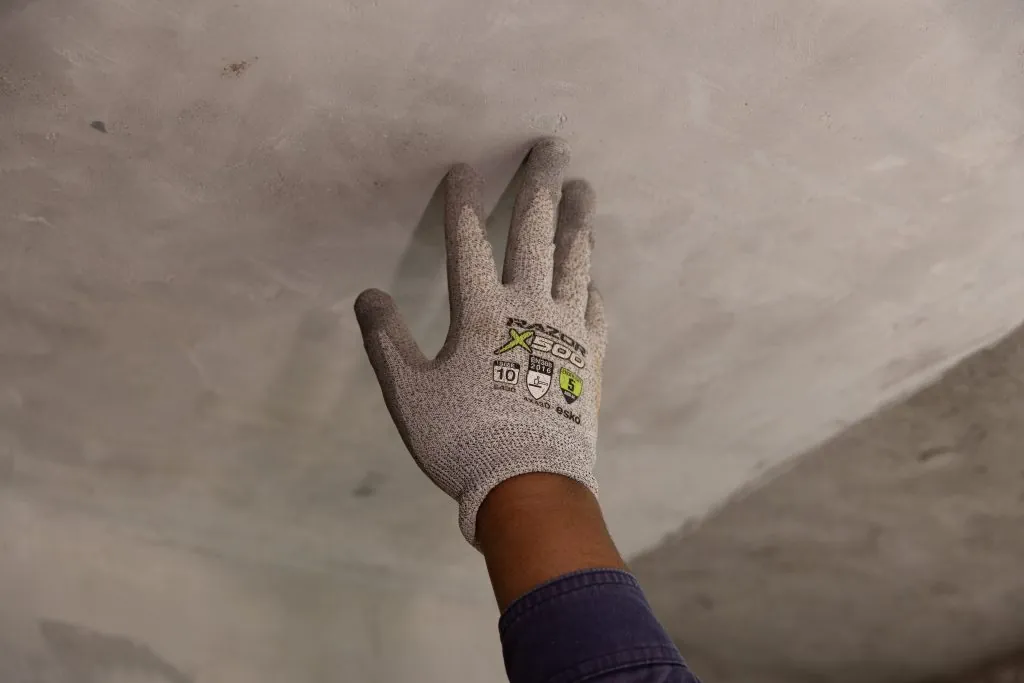
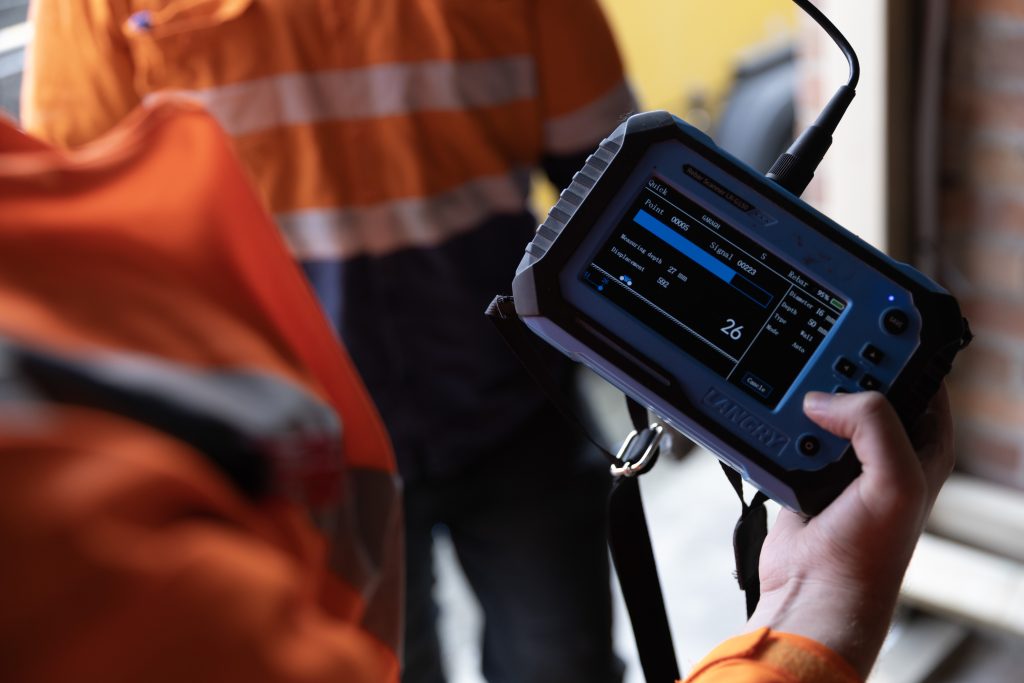
Contech undertook an on-site condition assessment using visual observations, carbonation testing, chloride testing, reinforcing cover measurements and electro-potential mapping.
The investigation established several contributing factors.
Carbonation depths ranged from 25 mm to 70 mm across the tested elements and had progressed beyond the reinforcing steel in many locations.
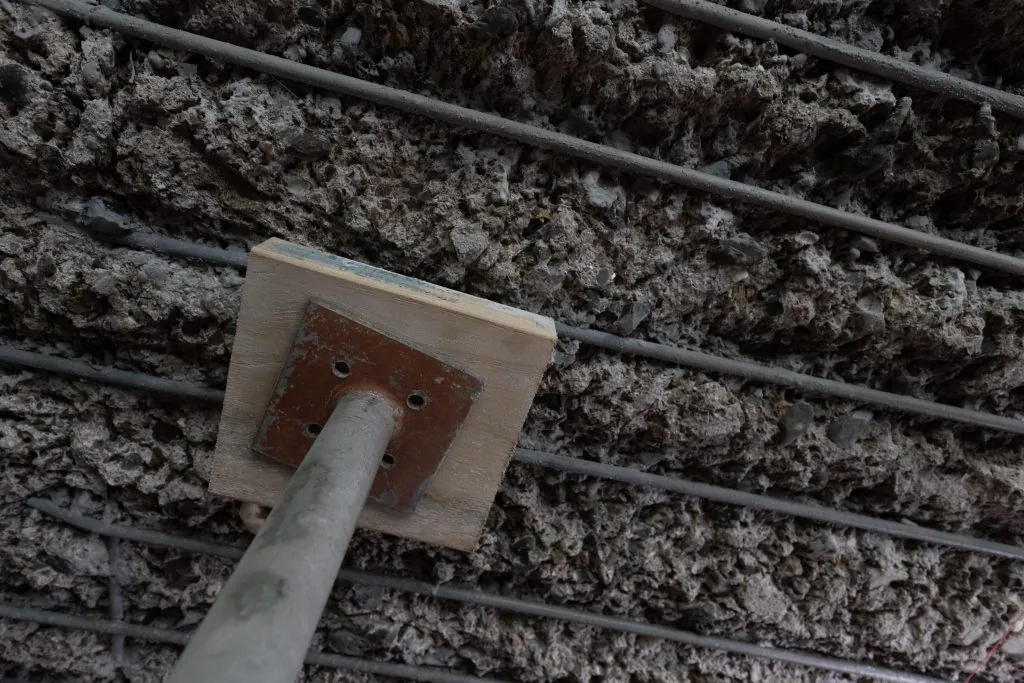
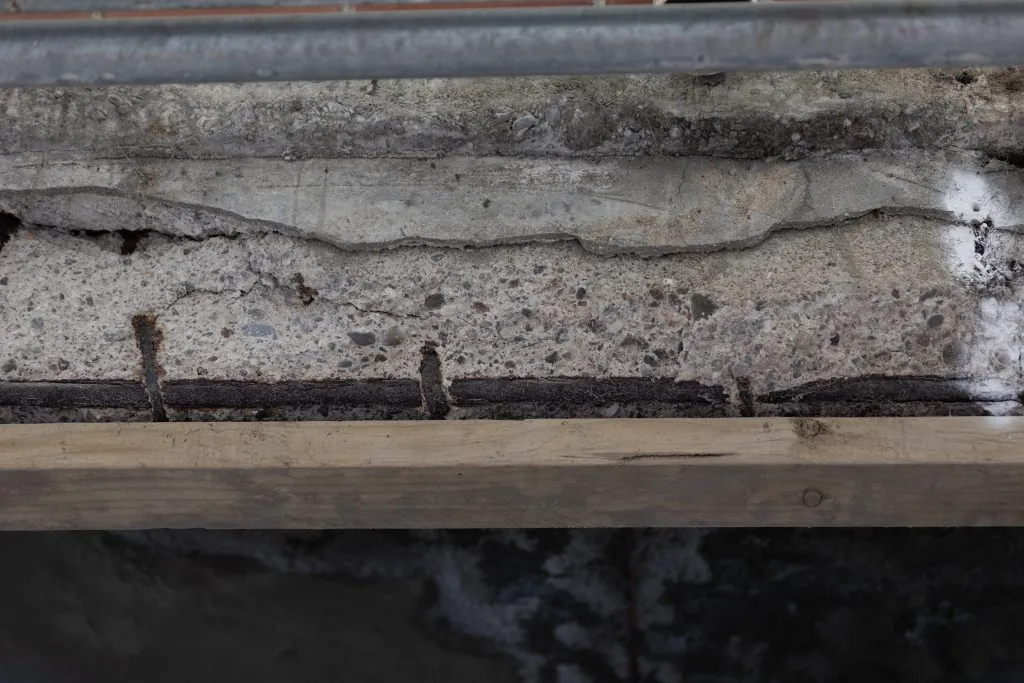
Concrete cover to the reinforcement was also generally low, with measurements in some garage and beam locations as low as 12 mm.
XRF testing indicated the presence of background chlorine within the concrete. Contech’s assessment concluded that carbonation, combined with low cover, was the principal driver of reinforcing bar corrosion, with the background chlorides increasing the corrosion risk once the concrete’s natural protection had been lost.
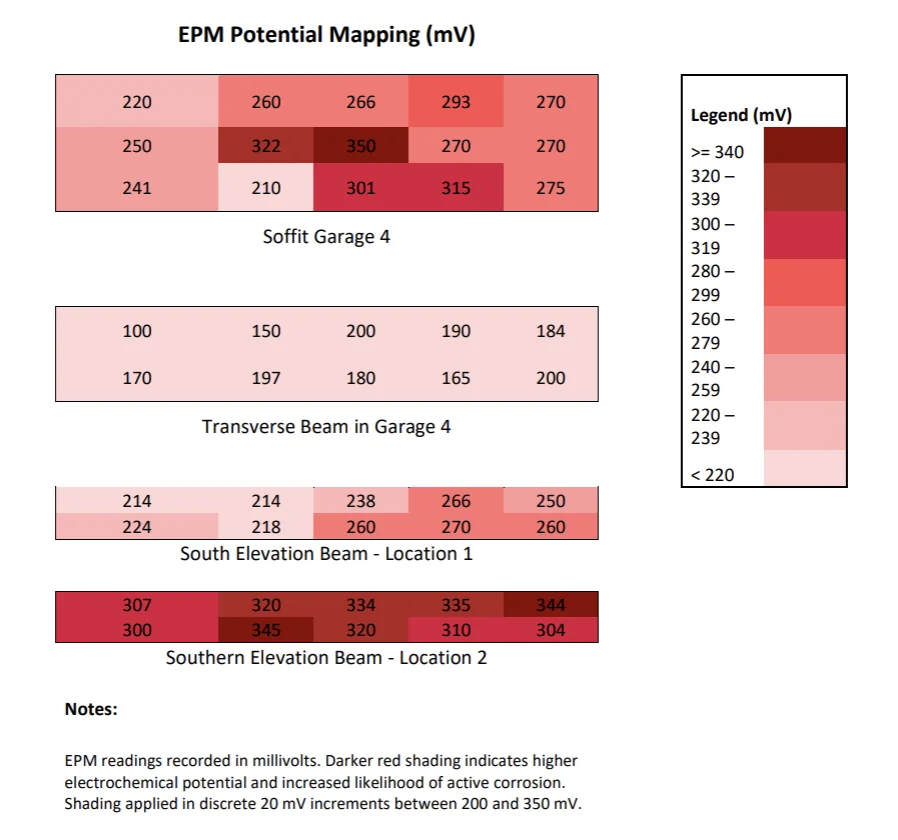
Electro-potential mapping added another important piece of evidence. It identified areas where corrosion activity may be present even though visible defects had not yet developed.
Together, the results showed why visible damage alone could not define the repair.
What was happening inside the concrete
Reinforcing steel is normally protected by the highly alkaline environment inside concrete.
At Marino Apartments, carbonation had reduced that natural protection. Low concrete cover meant the carbonation front could reach the reinforcement more readily, while the presence of background chlorides further increased the likelihood of corrosion once protection had been lost.
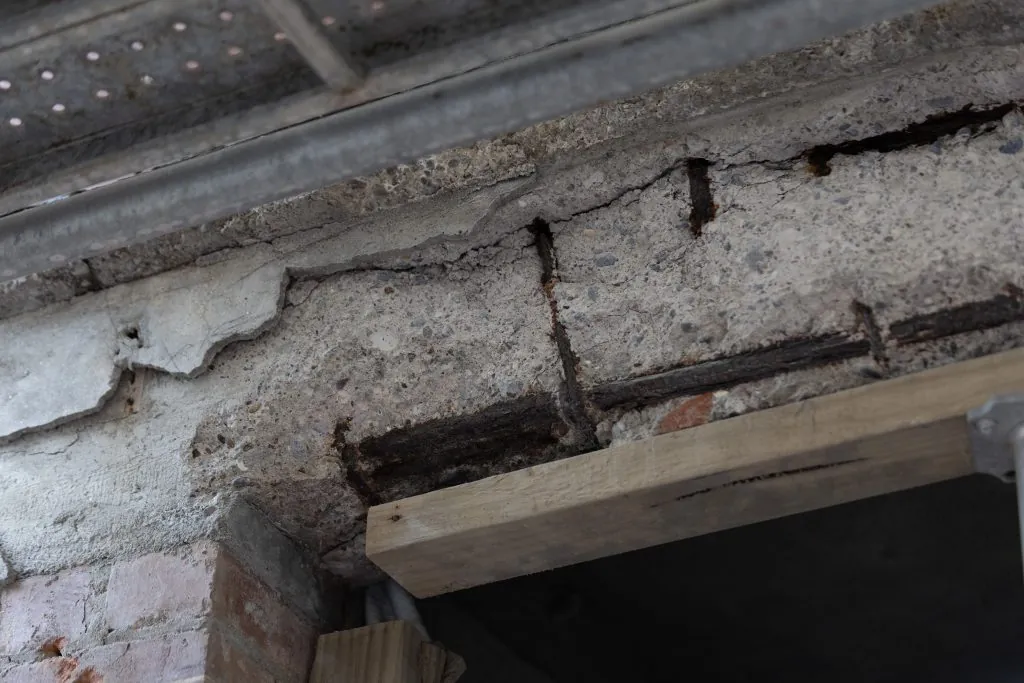
As reinforcing steel corrodes, the corrosion products occupy greater volume than the original steel.
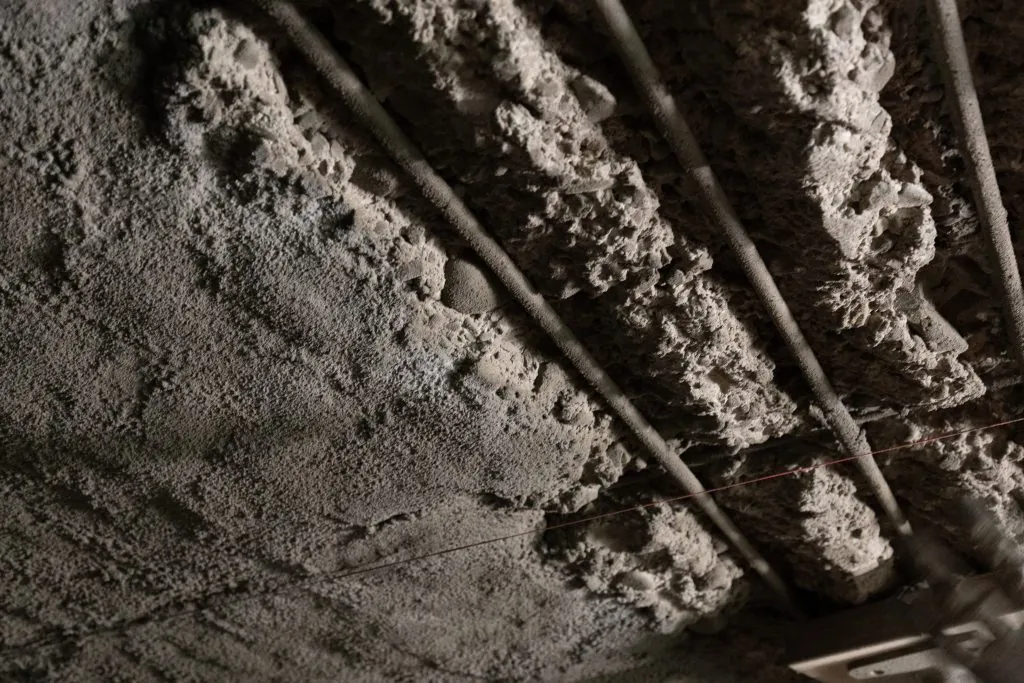
That creates pressure within the surrounding concrete and can eventually lead to cracking, delamination and spalling.
The visible damage was therefore the consequence of a deterioration process occurring beneath the surface.
Why patch repair was not enough
The condition assessment concluded that localised patch repair was neither viable nor defensible as the long-term remediation strategy for Marino Apartments.
The deterioration was too widespread.
There were no reliable boundaries between concrete that had already cracked or spalled and adjacent areas likely to deteriorate. Repairing individual visible defects could therefore leave corrosion continuing immediately beyond the repair.
Contech recommended a partial rebuild of the affected structural reinforced concrete elements.
This allowed the remediation to address the deteriorated concrete and reinforcement rather than simply covering the visible symptoms.
The remediation approach
The recommended methodology followed recognised concrete repair principles and relevant sections of EN 1504.
The approach included:
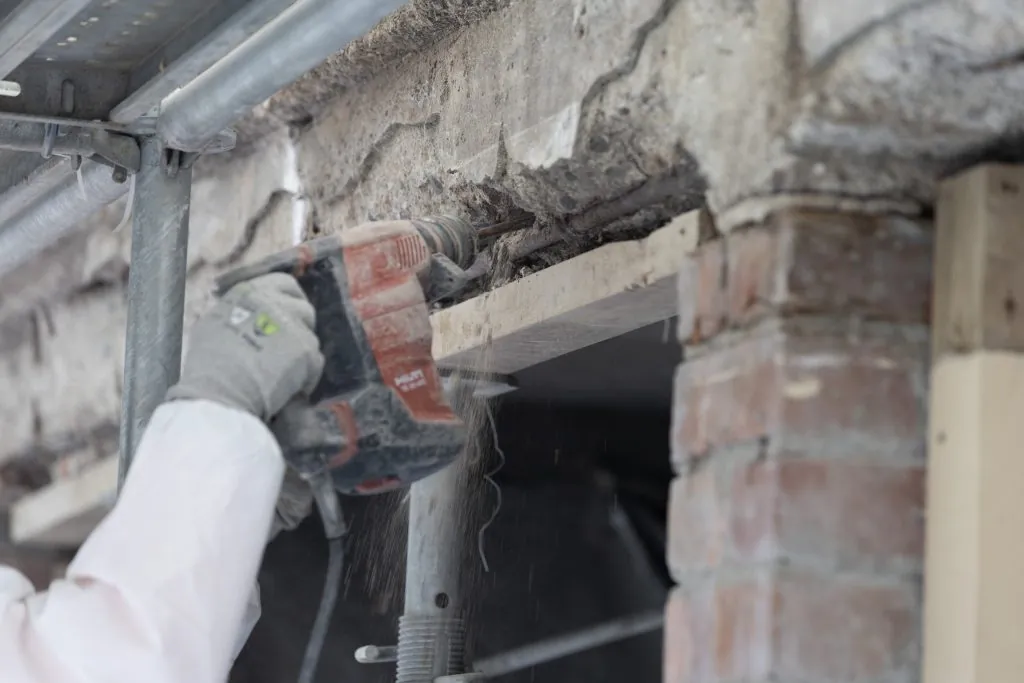
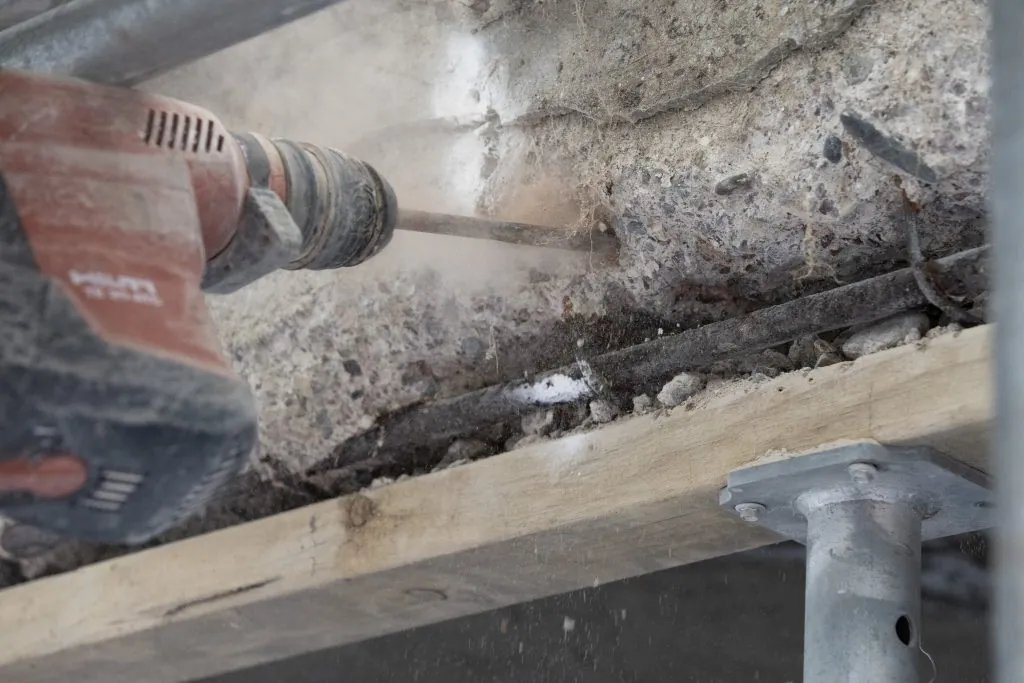
- removal of carbonated, contaminated and deteriorated concrete
- hydro-demolition where practicable and hand breakout where required
- exposure and assessment of the reinforcing steel
- replacement or supplementing of reinforcement where required
- reinstatement of the concrete using suitable repair systems
- finishing of the repaired areas to suit the surrounding structure
The point was not to apply a standard repair to every visible defect.
It was to remove the deteriorated material, understand the condition of the reinforcement and rebuild the affected areas using a methodology matched to the structure.
The outcome
The completed remediation addresses the deterioration beneath the surface rather than simply covering the visible damage.
At Marino Apartments, the process followed a clear sequence:
Diagnose the condition.
Understand the mechanism.
Remove what has deteriorated.
Assess and repair the reinforcement.
Rebuild the affected concrete.
That sequence is the real proof of the project.
For an ageing structure, good concrete remediation is not simply about making visible damage disappear.
It is about understanding why the deterioration occurred and selecting a repair methodology that matches the condition of the asset.
condition → diagnosis → evidence → mechanism → intervention → outcome
Need to understand what is happening inside your concrete structure?
Contech helps building owners, engineers and asset managers investigate concrete deterioration, understand its cause and develop remediation strategies matched to the actual condition of the asset.
Explore Concrete Repair Guidance →