30 Jan 2026 SH53 Lower Tauherenikau Bridge Repairs
PROJECT CONTEXT
The Lower Tauherenikau Bridge carries State Highway 53 between Featherston and Martinborough, crossing the Tauherenikau River in South Wairarapa. Originally constructed in 1917, the two-lane, eight-span reinforced concrete bridge is a key regional link. After more than a century of service, sections of the concrete structure were showing clear signs of deterioration. At the same time, investigations by WSP identified that the bridge bearings were well overdue for replacement, creating risks to the bridge’s ability to safely transfer loads and accommodate movement.
Contech were engaged by the Wellington Transport Alliance under their maintenance contract to undertake critical structural rehabilitation works. The project centred on restoring the bridge’s long-term performance through a combination of targeted concrete repairs and the complete replacement of the ageing bearings.
ACCESS AND CONCRETE REPAIRS
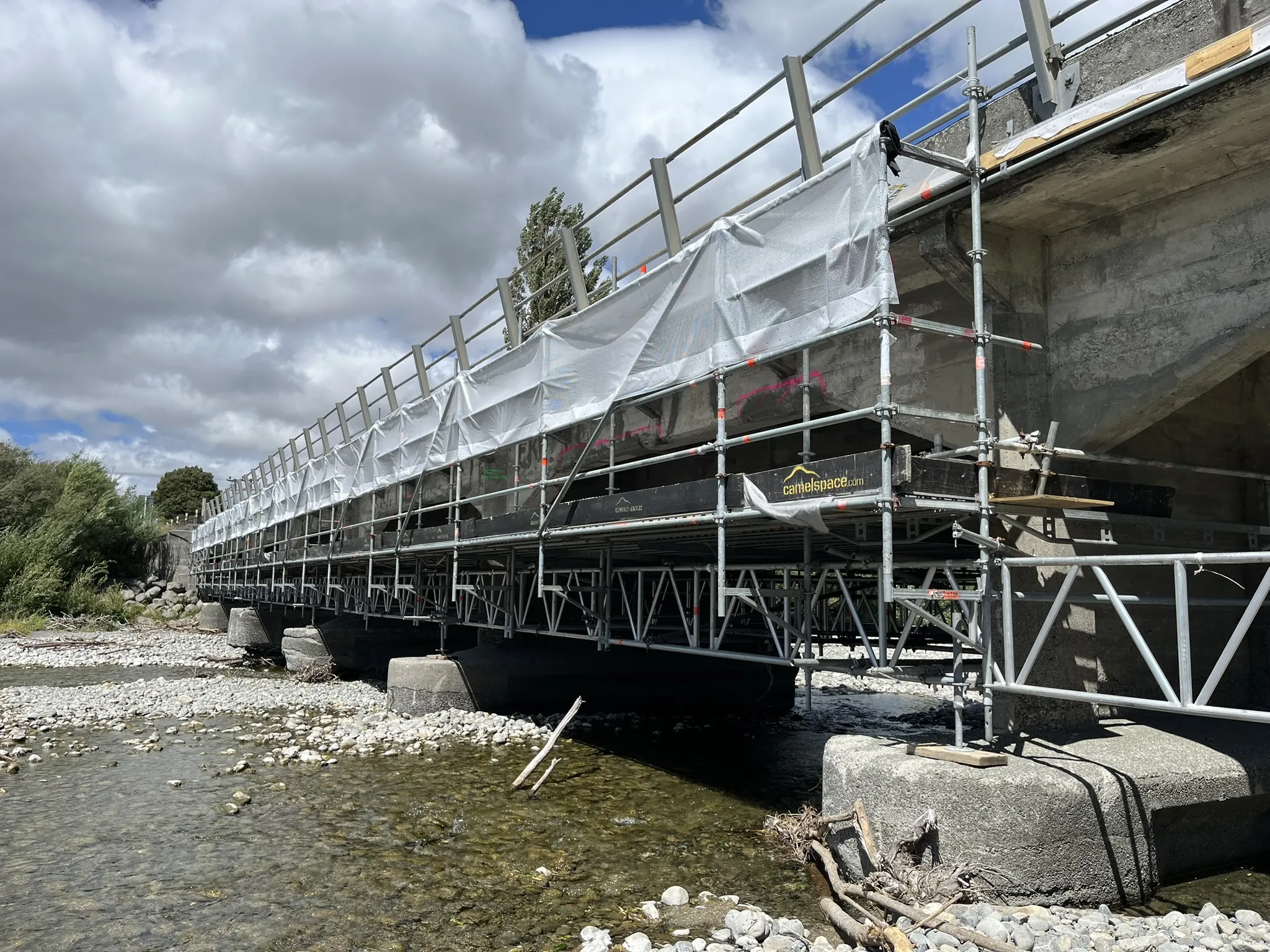
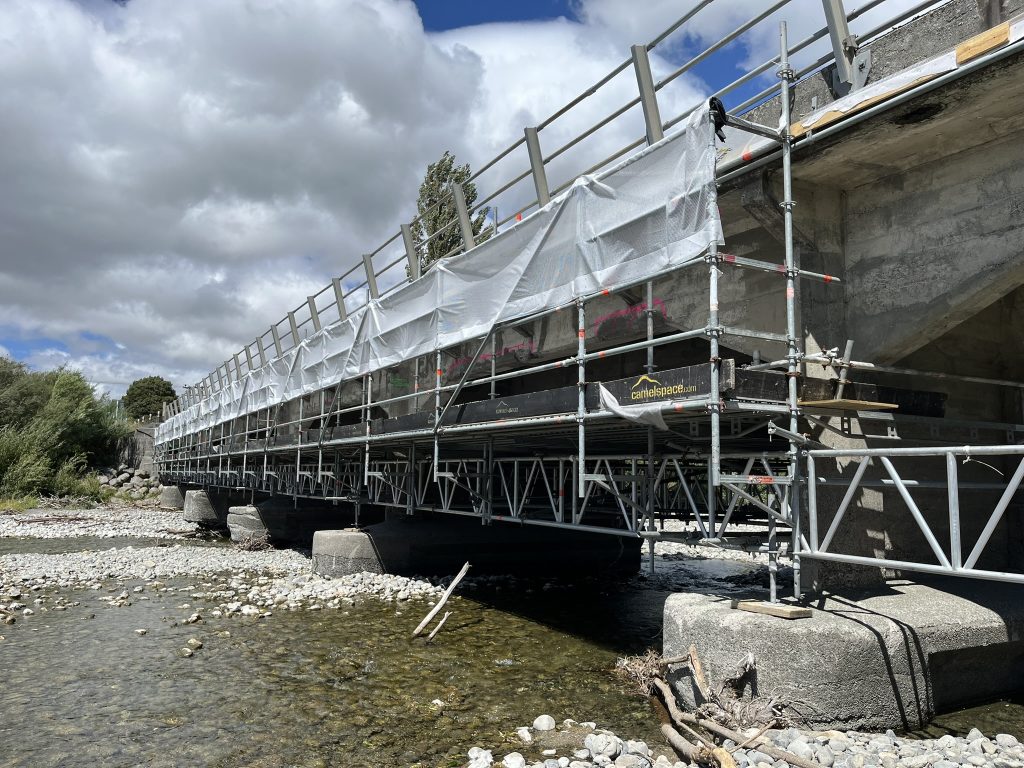
Working beneath an operational state highway bridge and above a live river environment required careful planning from the outset. Extensive scaffold access and containment systems were established to create a safe, controlled work zone while preventing debris entering the river. With access in place, the team began concrete repair works using hydro-demolition to remove deteriorated concrete from bridge beams, the deck soffit and pier areas. This process exposed reinforcement and sound substrate, preparing the structure for reinstatement. The removed areas were rebuilt using gunite dry-spray concrete, restoring original profiles and improving durability.
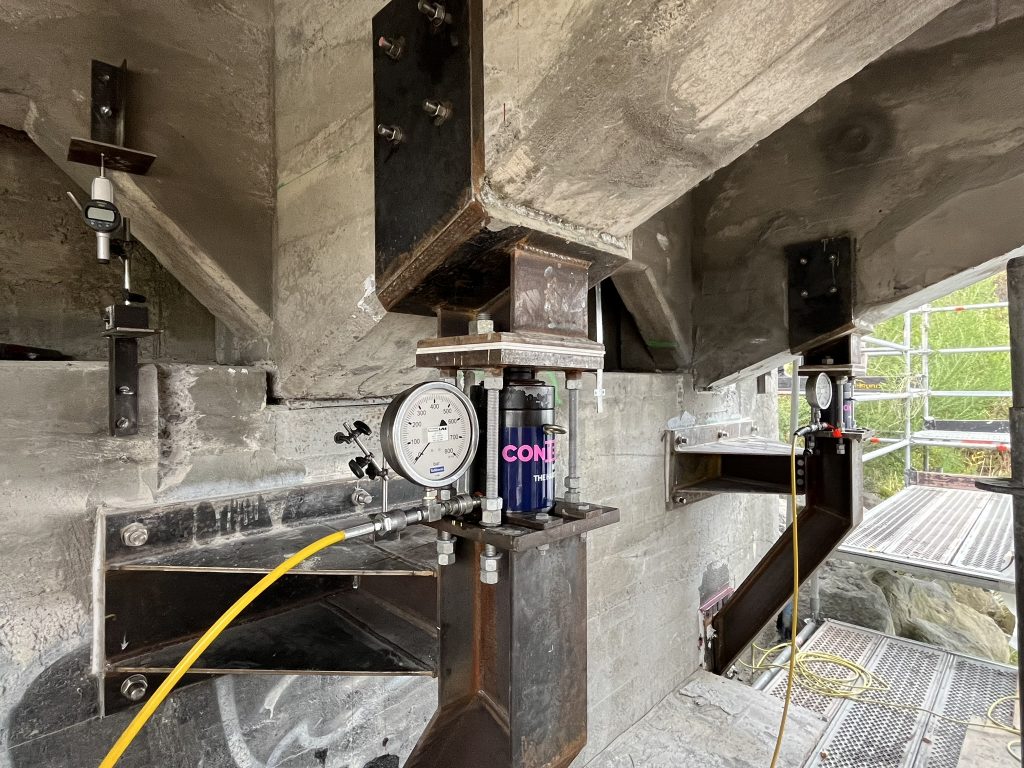
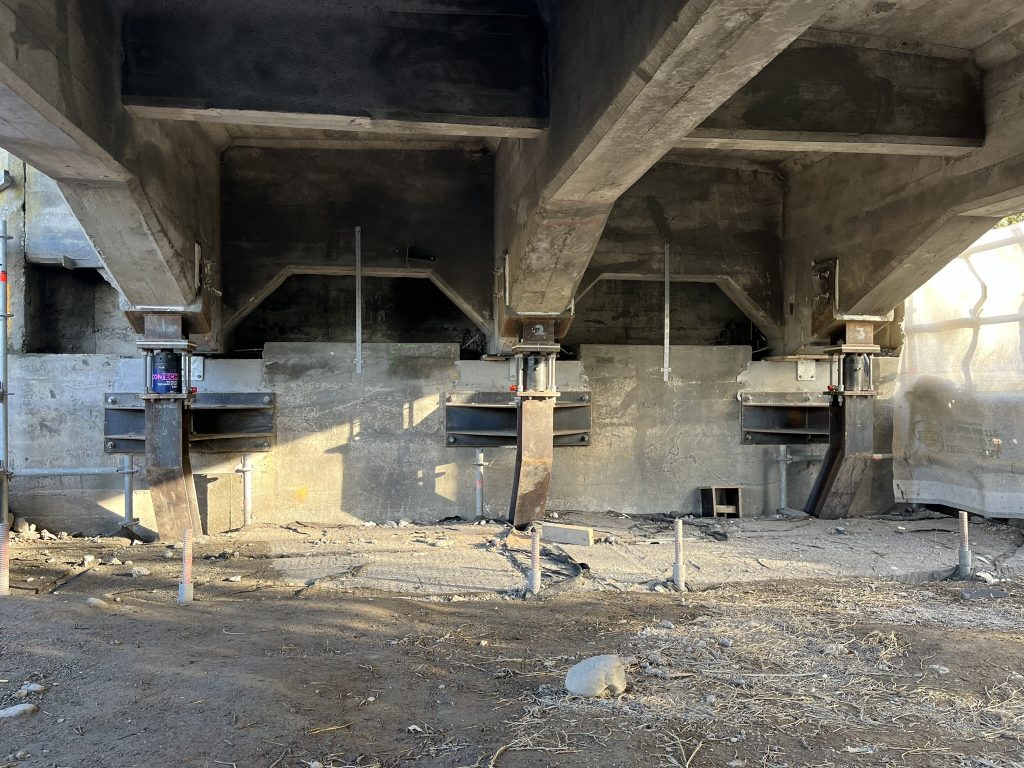
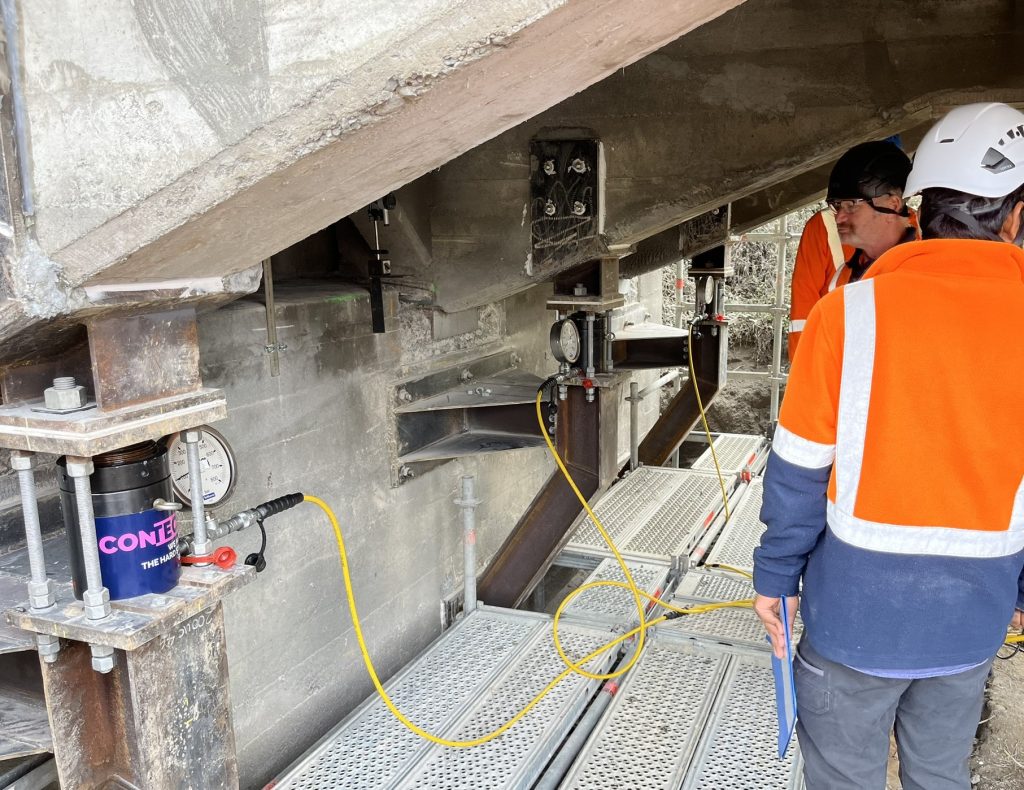
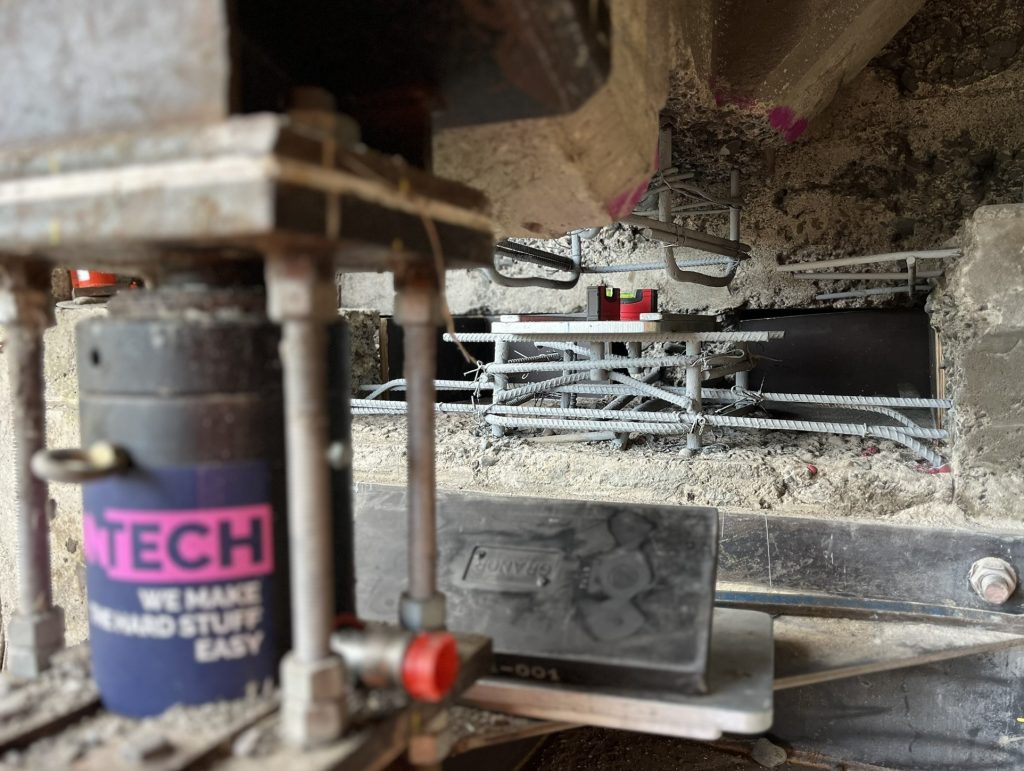
Alongside the concrete repairs, preparations were made for the bearing replacement, a key structural element of the project. Localised concrete removal was undertaken around girders and abutments to expose the existing bearing seats. Purpose-made temporary steel brackets were installed to support a system of hydraulic jacks positioned beneath the bridge superstructure. These jacks allowed the bridge to be carefully lifted and lowered in a controlled sequence, creating the clearance needed to remove the original steel bearings.
BEARING REPLACEMENT AND BRIDGE LIFTING
Very little was known about the condition of the original bearings before work began. Once exposed, they were found to be in extremely poor condition and completely seized, placing stress on adjacent bridge elements. Extracting them required further removal of surrounding concrete from both girders and abutments. Throughout the jacking operations, load and movement were continuously monitored to provide engineering verification and ensure the bridge remained within design tolerances.
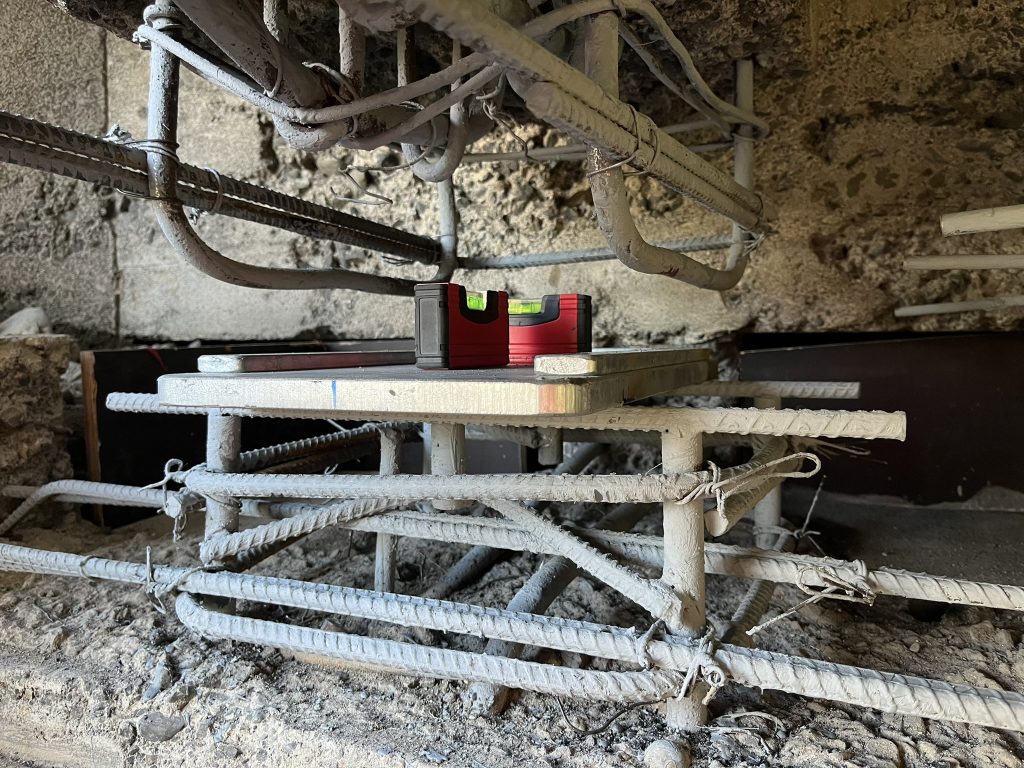
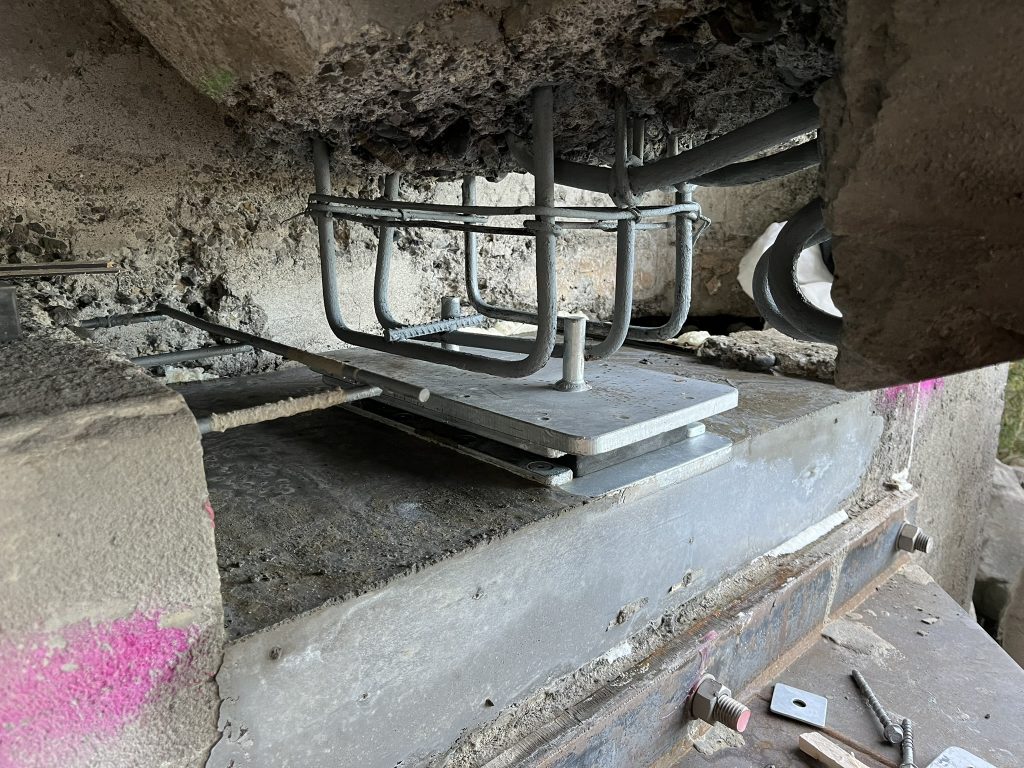
New elastomeric bearings were then installed on prepared seating surfaces, allowing the bridge to once again accommodate movement and load transfer as intended. These were cast in place with new mortar, and the surrounding structural zones were reinstated with new concrete to protect the repaired areas and restore continuity.
ENVIROMENTAL AND DELIVERY CONTROLS
The works were delivered in close collaboration with designers and the main contractor, with particular focus on site inspections, mark-out, sequencing and methodology. Activities were carefully programmed around river conditions, potential flood levels and resource consent requirements, while maintaining minimal disruption to traffic on the state highway above.
OUTCOME
Environmental management was a key consideration throughout. All concrete demolition arisings were fully contained, collected and removed from site. Work areas were progressively enclosed as operations advanced, with debris transferred to skips for disposal. Ultra-high-pressure water run-off from hydro-demolition was tested and confirmed to be neutral pH in relation to the river water, ensuring protection of the surrounding environment.
As part of the overall upgrade, new drainage dropper units were also installed to improve water management and reduce future durability risks, supporting the long-term performance of this historic structure.