

16 Jan 2026 Why Good Detailing and Certified Applicators Are Essential for FRP Installations
HOW CODEMARK CERTIFICATION AND QUALIFIED PROFESSIONALS DELIVER LONG-TERM CONFIDENCE
Fibre Reinforced Polymer (FRP) systems are reshaping infrastructure with unmatched strength, minimal weight, and outstanding resistance to corrosion. Yet, the true performance of FRP depends not just on the materials, but critically on the quality of installation.
Poor installation can severely compromise structural integrity, meaning the system may not work as intended and could even pose safety risks.
THE CRITICAL ROLE OF EXPERT DETAILING IN FRP INSTALLATIONS
No matter how advanced the product, correct detailing and installation are fundamental. Poor detailing does more than spoil appearances- it can undermine the entire structure, lead to premature failures, and result in costly repairs. For FRP, this risk is heightened: improper installation can mean the reinforcement simply does not perform as designed.
KEY DETAILING PITFALLS AND THEIR IMPACT
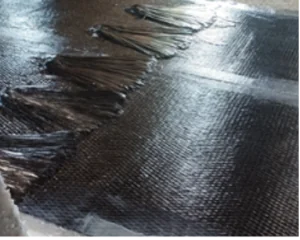
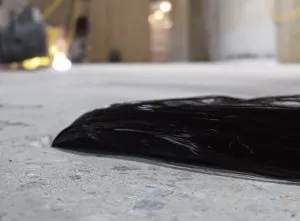
FRP Anchors: Excess rovings not correctly recessed create unsightly and structurally problematic mounds. Sharp corners and poorly finished edges on anchors can act as stress concentrators, increasing the risk of cracking or delamination. Rounded edges and careful finishing are essential to distribute stresses and maintain integrity.
Fibre Alignment: Aligned and parallel fibres are crucial for load transfer. Misaligned fibres or anchors may fail to capture the intended loads, reducing the effectiveness of the reinforcement and potentially leading to structural failure. Figure 5 is an example of an anchor which is not evenly dispersed to capture individual fibres. Qualified applicators know how to ensure every anchor is precisely placed and securely embedded.
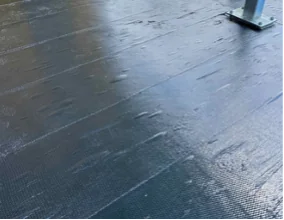
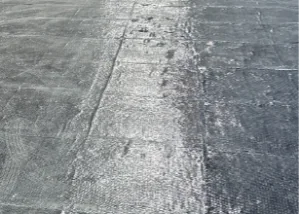
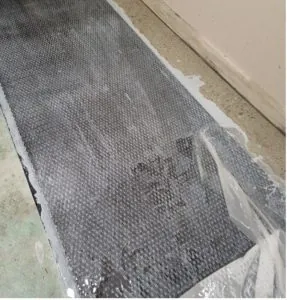
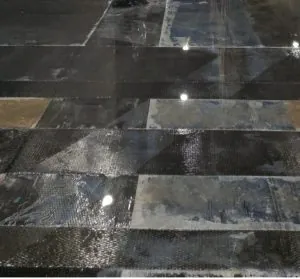
Bubbles or Voids: Trapped air during curing weakens the system, causing delaminations. Figures 3 and 4 are examples of trapped air during the curing process, which weakens the system, causing delaminations. Environmental factors, like direct sunlight, require adaptive installation techniques only experienced installation teams can deliver. A high level of technical familiarity with correct FRP installation is critical; to the untrained observer Figure 6 would appear to be a flawless installation. However, interlayer voids between the pultruded FRP creates hollows, which are delaminations between layers.
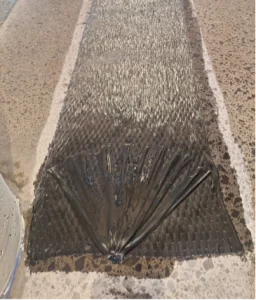
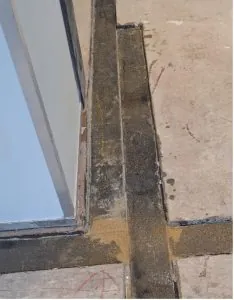
Resin Saturation Errors: Over- or under-saturation of resin leads to brittleness or poor adhesion, risking debonding and system failure. Figures 7 and 8 are examples where oversaturation leads to poor adhesion as the weight of the saturated FRP causes it to slide off the substrate.
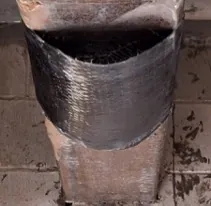
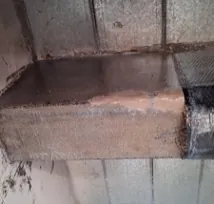
Panel Gaps or Misalignments: These disrupt load transfer and compromise the system. Only a trained applicator pays attention to the nuances of fibre alignment.
Improper Sealing: Moisture ingress can cause catastrophic delamination. Certified applicators use proven methods and products to ensure watertight installations.
Inconsistent Fastener Placement: Missing or misplaced fixings reduce reliability. Highly qualified applicators follow strict protocols to ensure every fixing is accounted for.
For asset owners, these issues translate into higher maintenance, reduced lifespan, and safety concerns. For engineers, they represent design and specification risks that can undermine entire projects.
THE IMPORTANCE OF INSPECTIONS AND COMPETENT SUPERVISION
A critical difference between FRP and traditional steel reinforcing is how installations are verified. With steel, inspectors check bar sizes, spacing, and type- parameters that are well understood and easily measured. For FRP, verification is more complex and requires intimate knowledge of the system. Without competent PS4 inspectors who understand FRP detailing, there is a risk that errors go unnoticed, compromising the structure.
This is where installer certification becomes vital. CodeMark certification for both the products and the installers ensures that those applying FRP are accredited and trained to do so correctly. For PS4 inspectors, knowing that the installer is CodeMark-certified provides confidence that the installation meets the highest standards and that the verification process is robust.
WHY CODEMARK CERTIFICATION AND QUALIFIED APPLICATORS REMOVE ALL DOUBT
When it comes to FRP installations, not all applicators are created equal. The best way to guarantee quality is to choose CodeMark-certified products and CodeMark-qualified applicators. Here’s why:
Proven Compliance: CodeMark confirms that products and installers meet the Building Code’s strictest requirements.
Clear, Tested Guidelines: Certified applicators follow approved installation protocols, reducing ambiguity and ensuring every detail is executed correctly.
Reduced Risk: Employing CodeMark-qualified professionals minimises the chances of detailing errors, rework, and costly failures.
Confidence and Peace of Mind: Engineers and asset owners can rest assured knowing that installations are handled by experts with verified credentials and regulatory backing.
CONCLUSION
Choosing CodeMark certification isn’t just about the product—it’s about the people who stand behind it. By insisting on highly trained, CodeMark-qualified applicators and competent inspections, you’re investing in certainty, safety, and the long-term success of your FRP installation. Don’t leave your assets to chance—choose confidence, choose certified expertise.
For more information or expert advice on your FRP and concrete projects, get in touch